On Sunday, June 14, the Sunset Park Puerto Rican Parade moved through Sunset Park, Brooklyn — a separate, community-run celebration from the larger Puerto Rican Day Parade held on Fifth Avenue in Manhattan the same season. Now in its 10th year, it was founded by El Grito, a local community organization, as a grassroots alternative to that bigger, more commercial event.
Before the parade began, a statue of the Virgin stood at the front, banked in roses and delphiniums, a Puerto Rican flag tucked among the flowers at its base. People gathered around it quietly — a small group in matching white t-shirts printed with her image, some in wide straw hats, one woman with her hands pressed together in prayer. An announcer spoke — thanking organizers, introducing this year’s La Madrina, Brooklyn muralist Maria Dominguez — and then the parade started, the Virgin leading the way, past the Basilica of Our Lady of Perpetual Help, a Minor Basilica since 1969 and one of Sunset Park’s oldest landmarks.


Marching in the middle of the field, a folklórico group moved through the route — women in wide, sweeping skirts turning in unison, red and white fabric catching the wind with every step. Beside them, a masked figure in a horned, ruffled vejigante costume ducked and weaved through the crowd, drawing shrieks and laughter from kids along the barricades.
Not everyone was in costume. A few feet from the folklórico dancers, an older man in a beach t-shirt and sneakers danced anyway, straw hat pushed back, a plastic shopping bag still in one hand — no less part of the parade than anyone in matching dress.
El Grito de Sunset Park, the community group behind the parade, takes its name from the 1868 Grito de Lares uprising, an attempt to free Puerto Rico from Spanish rule. Founder Dennis Flores started the group in 2002, after years of documenting clashes between police and Puerto Rican revelers who used to gather informally on Fifth Avenue after the Manhattan parade. It took a decade of organizing before the city granted a permit for an official parade in 2015. “We took power away from the police,” Flores has said. “That’s democracy.”


This year’s parade carried a theme — “gatherings of a community for a cause” — and it showed. Flores has said the day is about affirming that the community is “still here” and “refuses to be displaced,” a nod to rising rents pushing longtime residents out of the neighborhood. That thread ran through the march: clusters of marchers carrying messages about Puerto Rico’s political status, alongside banners from local groups asserting their place in the neighborhood.


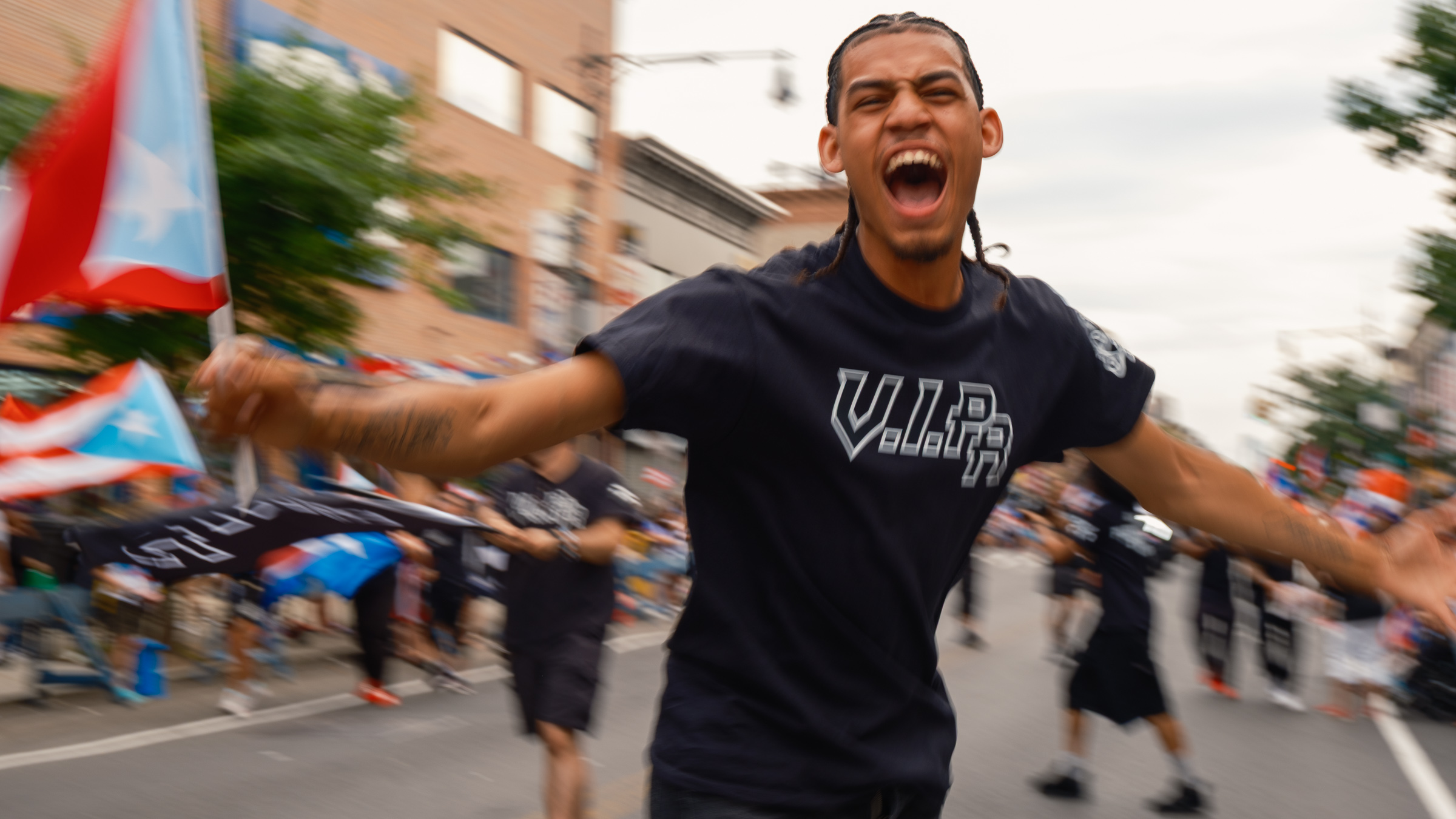
Further down the route, a large contingent moved through in matching black shirts, flags raised, chanting as they walked — cars behind them wrapped entirely in the Puerto Rican flag, one polished black truck leading the way. They walked in formation, then broke rank to shout and work the crowd, and the block shouted back. No banner named them. It didn’t seem to matter — everyone around them already knew what day it was.


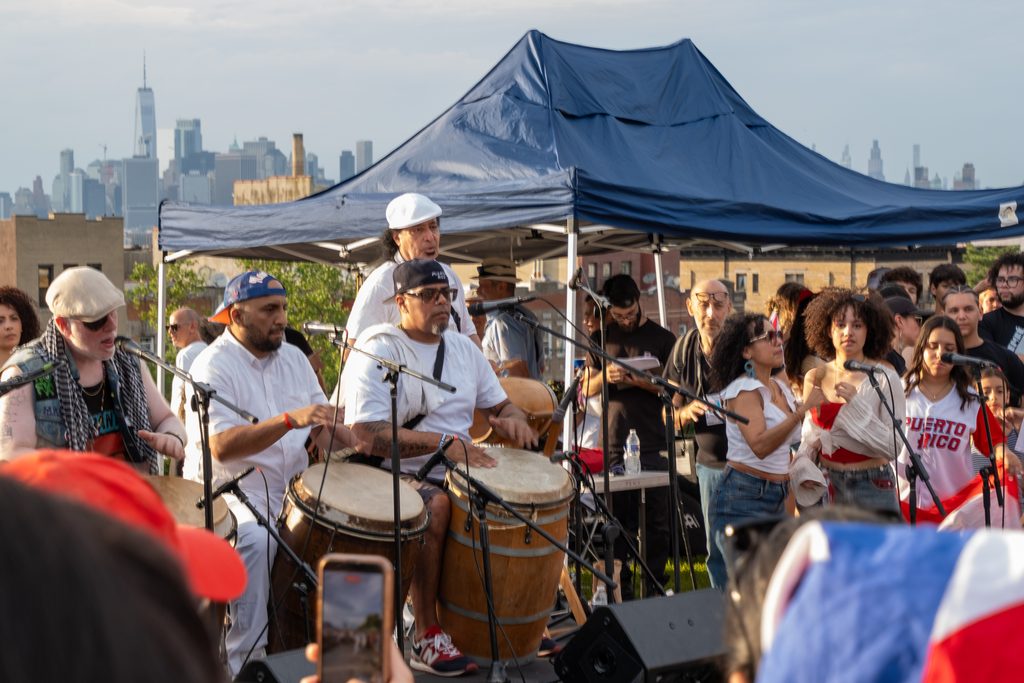
There were no floats sponsored by beer companies here, no corporate banners — just the block itself, decorated by whoever lived on it. Every time a car passed with music blasting, people on the sidewalk picked it up without being asked, dancing, flags going up on reflex. One woman was already dancing when I raised my camera, and when she noticed, she didn’t stop — she danced harder, playing to it. This wasn’t a parade people came to watch. It was one they’d shown up to be part of.